
Strength Training In Midlife: What It Really Looks Like (Without The Gym Bro Nonsense)
Midlife strength training can improve metabolism, balance, joint stability and everyday energy - but most people avoid it because they think it’s intimidating. Here’s what it really looks like.
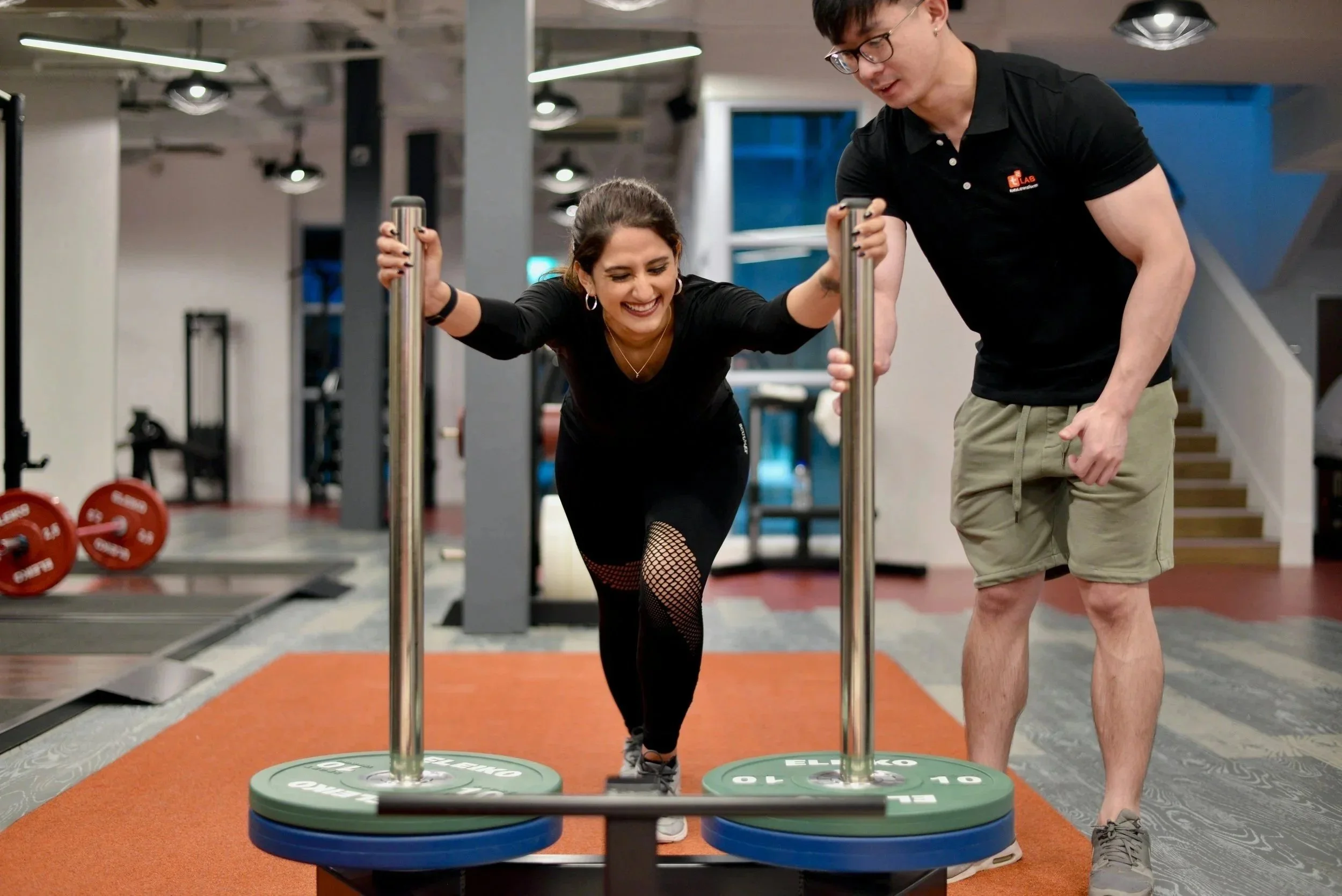
Photo by TSquared Lab on Unsplash
Loud grunting, red faced men, and a random voice shouting “GIMME ONE MORE!”
No, it’s not Donald Trump’s encounter with Stormy Daniels - it’s what most newbies assume is happening on gym floors up and down the country.
And it’s one of the main reasons why many people in their 40s and 50s say they avoid getting started with strength training, even though they know they should.
It’s understandable but also a huge shame, because strength training is the closest thing we have to a cheat code for midlife.
And none of it requires gym-bro energy.
Let’s take a quick look at the real reasons every adult (but especially those over 35) needs strength training; why so many avoid it; and what it actually looks like when you strip away all the nonsense.
Why Strength Matters More in Midlife
After about 35, you start losing muscle every decade unless you actively work to keep it. We’re talking 3-5% of your muscle mass per decade. And once you hit 60 the rate of degeneration accelerates - again unless specifically addressed.
‘But why should I care?’ I hear you ask. ‘I don’t want to look Beach Body Ready. I just want to sit back down at my desk without making unfortunate noises.’
I hear you. But muscle is far, far, more important for our bodies than just looking good, and moving our skeletons from the sofa to the fridge and back. It plays a critical role in the following (deep breath in):
Bone health and osteoporosis prevention
Blood sugar control
Metabolic regulation
Weight management
Hormone Function
Combatting and reducing inflammation
Blood pressure
Cardiovascular health
Cholesterol levels
Organ function
The immune system
Mood
Brain function…
…to name a selection. Let’s put it another way. Here’s how making strength training a part of your life from 40 onwards can help you with some of the issues you may be experiencing. It:
improves blood sugar control
increases joint stability
reduces injuries
boosts bone density if you’re perimenopausal or approaching 60.
improves posture
reduces back pain
improves balance
raises and sustains everyday energy
improves your ability to lift, carry, run, climb stairs, play with your kids etc
And if you’re a dedicated cardio exercise lover, then good news, because adding some weight training into the mix will actually make the cardio easier, more fun, and progress quicker (because muscles support the work).
Why People Avoid It
Here’s my list of possible reasons on why you may not have embraced it like a loving parent so far:
You think it’s for younger people
You think it’ll make you look “bulky”
You worry about looking like you don’t know what you’re doing
You fear aggravating old injuries
You worry your coach will make you wear fingerless gloves and a weightlifting belt round your waist.
You assume you need to lift heavy weights or use intimidating machines
You once had a coach who pushed you too hard
You think it has to be painful
You don’t want to train next to the 25-year-old bench pressing a small car
You think you’re “not strong enough” to start
All understandable. All fixable. Some of those are just not true, and the rest are all totally avoidable (especially the fingerless gloves thing).
Illustration by Art Attack on Unsplash
Strength Training ≠ Bodybuilding
This is the biggest misunderstanding, because there is a different between the two.
Bodybuilding means chasing maximum muscle size, with lots of volume (a LOT of training), lots of specialised complicated movements, high rep (repetition) counts and a focus on aesthetics.
Midlife Strength Training means achieving stability, muscle retention, joint resilience, capacity through simple movements, steady tempo, safe ranges of motion, controlled breathing, no ego, no screaming, no Gymshark tank tops.
After all, you’re not trying to look like a Greek statue; you’re trying to feel younger from the inside out.
What Midlife Strength Training Actually Looks Like:
Two or three 45-55 minute sessions each week, focusing on the big five movement patterns: Hingeing, Squatting, Pushing, Pulling, Carrying.
That’s it. You don’t need 17 arm exercises, and more is not better here; consistency is.
With clients I use a shorter range of motion if we need to protect their hips, knees, back, shoulders etc. We play with the tempo of each movement to ensure it is pain-free, controlled, and the brain has a chance to store it and make it easily repeatable.
And then (almost all of the time) we finish each exercise - and each session - with the client feeling like they could have done a bit more. The goal is not to lift the heaviest weights, it’s to be able to train again in a few days’ time, pain-free
The Payoff
Midlife strength training isn’t about vanity. It’s about:
being able to get off the floor without grunting
carrying heavy shopping without wincing
having a back that doesn’t seize up in meetings
feeling stable, grounded and strong
running, walking, climbing stairs with ease
lifting your kids without hesitation
being able to take back up the sports you used to love doing
keeping independence long into older age
In short: feeling physically capable again. If you’d like to discuss how the above might apply specifically to you, please drop me a little message here and I’ll get back to you within 48 hours to discuss a free, no-obligation conversation.
