
Stop Blaming Your Metabolism For Midlife Weight Gain: Here’s The Truth
Midlife weight gain is real - but your metabolism isn’t the villain, says a landmark study published in Science. Here’s what’s actually changing in your 40s and 50s, and what you can do about it.
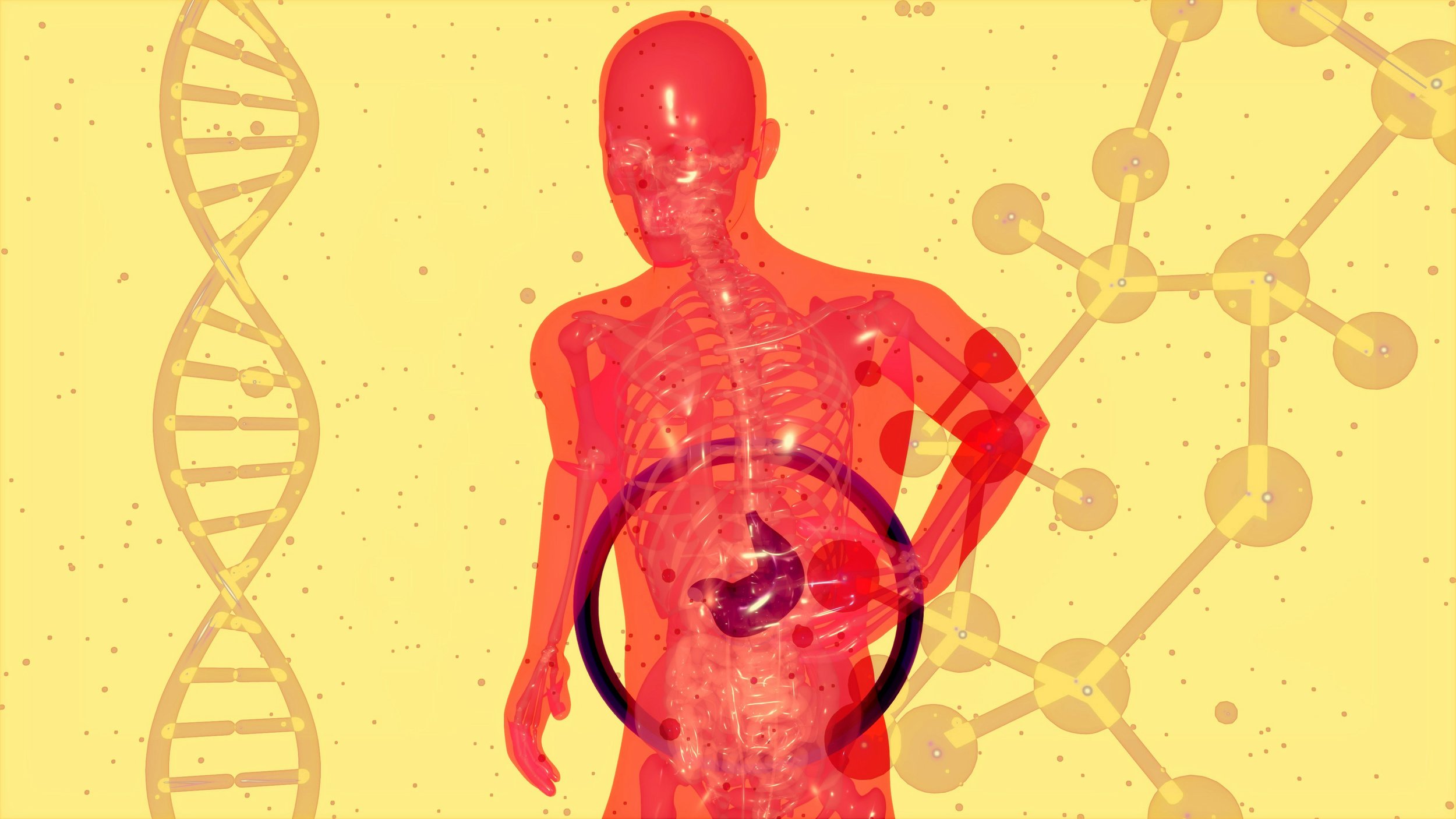
Illustration by julien Tromeur on Unsplash
How many times in recent years have you seen, heard, read or said a version of this:
“My metabolism has slowed down. It’s all downhill from here.”
Yes that’s what I thought. So often, it’s become sort of accepted as life woe lore. Except: the science doesn’t actually back that up. In any way. At all.
A landmark 2021 study published in Science analysed data from 6,400 people aged 8 days to 95 years using the gold-standard method for measuring energy expenditure (calorie burn). And it found something most midlifers have never been told:
Metabolism stays remarkably stable from age 20 all the way to 60.
Your stomach does not, in fact, get to its 40th birthday, crack out the Uggs and go on semi-retirement. Your liver and pancreas do not put their feet up and light a couple of cigars; and your fat cells do not suddenly turn into a troupe of Augustus Gloops.
So if metabolism isn’t the culprit, what is going on? Basically it’s your lifestyle, I’m afraid. But before we get to that, a quick topline of the data to emerge.
What the Big Study Actually Found
The research (Pontzer et al., 2021) looked at total daily energy expenditure across the entire human lifespan. The key metabolic phases were:
• 0–1 years: Off-the-charts high (about 50% higher than adults)
• 1–20 years: Gradual decline as we reach adulthood
• 20–60 years: Flat, stable, consistent metabolism
• 60+ years: Slow decline of roughly 0.7% per year
That third line – 20 to 60 – is the bit that should grab your attention. It seems your middle aged metabolism is, biologically speaking, the same engine you had under the bonnet during what you may currently be viewing as your ‘glory years’ - your 20s and 30s.
So why does it all feel so different now then? The engine’s just a little rusty that’s all. Life has tricked you into neglecting it and making you think you’ve devolved from a Maserati into a Morris Minor.
Here’s what’s going on.
1. NEAT drops — often by hundreds of calories a day
NEAT = Non-Exercise Activity Thermogenesis. In normal language this means: the calories you burn through daily movement that isn’t formal exercise. This includes walking, fidgeting, tidying, carrying shopping, getting up and down from chairs, everything. The data shows most adults lose 200–700 calorie burn/day of NEAT from their 30s into their 50s without ever noticing. Why? None of the answers will surprise you:
• Desk jobs
• Longer commutes
• Doom scrolling as a hobby
• Evenings spent ‘recovering’ on the sofa
• Parenting
• Decision fatigue
• Stress
That’s a significant number of calories to lose right off the bat.
2. Muscle quietly declines
From around age 30, adults who don’t strength train lose 3–8% of muscle per decade. This is more important than it might sound at first if you’re someone who has no desire to look super muscley or toned. Muscle is extremely metabolically active, which means that it’s involved in a ton of vital processes in your body and needs a lot of calories to enable it to function effectively.
Less muscle = slightly lower calorie burn at rest. And more importantly:
Less muscle = less power, more pain, more fatigue…which in turn reduces movement even further.
It’s this secondary effect that I believe matters most.
3. Stress and cortisol shift the landscape
Midlife, as you well know, isn’t simply a matter of “I’m a bit busy.” It’s layered: career/parenting/ageing parents/finances/relationship rollercoasters/sleep/health.
Chronically elevated cortisol (the body’s main stress hormone):
• increases appetite
• encourages fat storage around the middle
• disrupts sleep
• lowers spontaneous movement
• reduces training recovery
This combination affects energy far more than metabolism slowing ever could.
4. Sleep patterns change, often without people realising
Yes if you’re a newish parent you may be thinking ‘duh, I haven’t slept through since [insert your own random and dramatic date from the 19th century here],’ but did you know that when you are able to catch some Zs the sleep is lighter, the quality lower, its restorative capacity weaker and the interruptions are more frequent?Sleeping less than 6 hours a night:
• increases hunger spiking hormones by 20–30%
• reduces insulin sensitivity (not good for your blood sugar)
• lowers motivation to move
• increases cravings for quick-hit foods
Again: this is nothing to do with a dying metabolism and everything to do with recovery.
5. Life gets heavier
The growth in responsibilities and brain fog (‘cognitive load’), the loss of free time, and mental and physical bandwidth. But this is not down to changes in your body, but rather your environment.
Photo by Tetiana Padurets on Unsplash
Ok So What Actually Helps in Midlife?
Basically, fundamentally changing the way you relate to yourself.
Switching from seeing in the mirror someone who is a more battered version of the you from 20 years ago, to seeing someone who is a completely different, equally fascinating and just as capable version, but with a new operating manual which needs to be absorbed. To employ two really banal but very useful clichés:
20–40 = GO HARD OR GO HOME
40–60 = WORK SMARTER NOT HARDER
Here’s how (I will be doing separate, more detailed blogs on each of these five):
1. Increase NEAT (your quiet superpower)
Yes, 10,000 steps a day is often quoted but is arbitrary, and all available study data shows the real health benefits tap in around 7,000–8,000 steps for adults, with diminishing returns coming in after that. [In case you’re interested, the 10,000 figure came about as a result of a Japanese 1960s marketing campaign. The Japanese character for ‘10,000’ looks like a figure walking.]
If you currently average a lot less, build incrementally; jumping straight to 7,000 usually ends in start-again-Monday territory.
Instead, if you add 20-minutes extras of total walking a day the maths works out (roughly) like this:
Assuming you don’t have the leg length of a supermodel, a 20-minute walk ≈ 2,000 steps, which equates to an extra:
→ ~14,000 steps/week
→ ~700,000 steps/year
→ ~560 km/year
→ ~35,000–50,000 calories/year
Equivalent to 10–14 lbs of energy turnover per year.
Simple ways to increase NEAT:
• Walk while on phone calls
• 10-minute stroll after meals
• Circuit of house/office every 30–60 mins
• Do household tasks with a bit more movement (like dancing while hoovering; but please: no Macarena)
2. Strength training (the midlife multiplier)
Two sessions a week is enough to:
• rebuild muscle
• improve insulin sensitivity
• increase joint stability
• reduce injury
• boost energy
• increase confidence
• bring back your mojo in the bedroom
Strength in the second half of your life actually matters far more than in the first.
3. Protein and structured meals
Without even knowing you, I can tell you right now your body will do better with: consistent protein as a core pillar; blood-sugar-stable meals; fewer long gaps between feeds. All of these contribute to controlling hunger, boosting energy and improving decision-making.
4. Protect your sleep fiercely

Photo by Michael Starkie on Unsplash
You don’t need perfect sleep, you need protected sleep. Which means being intentional about it. A few quick and realistic tweaks you can, and should, make:
• 20–30 minutes earlier bedtime (if you’re going to toss and turn for the first little while, do it earlier. Metabolically speaking, every hour of sleep before midnight is worth two after).
• Calmer pre-bed routine (try and keep the falling-into-bed-straight-after-a-few-vinos-a-horror-streaming-binge-and-a-tipsy-argument from becoming a nightly occurrence).
• Less blue light in last hour (phones, tablets, laptops, telly off - these all delay your body from producing sleep-inducing hormones).
• Lighter evening meals (if your body is digesting those two bowls of spag bol and half tub of Cookie Dough, it ain’t getting ready to settle down for the night. If you can, finish eating at least 2 hours before you hit the hay.
• No doomscrolling in bed (this one is obvious, for so many reasons).
All small changes, big effect. Yes, I’m aware you’ve read these things a million times but you know why you’re bored of reading it? Because it’s everywhere. And it’s everywhere because (in contradiction to ‘midlife metabolism syndrome’) it’s true.
5. Nervous-system regulation (your hidden variable)
Boundaries, quiet time, meditation, saying “no” more (so hard yet so absolutely critical for mind and body), safe people, breathwork, making time for cherished hobbies…As weird as it may sound, these directly affect: appetite, cravings, energy, recovery, inflammation, mood.
The Bottom Line
This phase of your life doesn’t come with a mandatory Middle Aged Spread order. The machine still works; it’s just the surroundings that changed. And once you understand what’s actually driving the shift (movement patterns, stress load, sleep, muscle) you can work with this phase instead of fighting it.
